David Jenkins · 8 November 2026
Valehouse Primary Eco-Award Spurs Shifts in Brook Flood Protection Methods
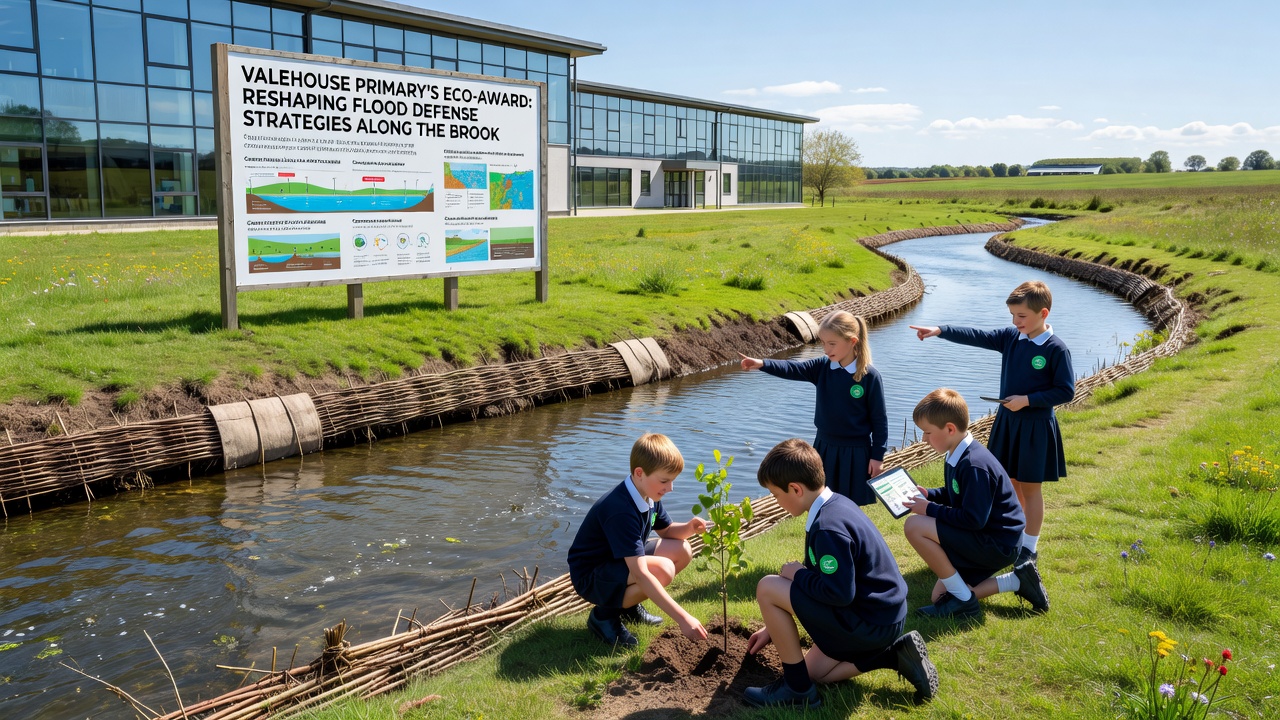
Local education initiatives at Valehouse Primary have gained attention for their role in community flood management efforts along the brook, where an eco-award recognized student-led projects that combine habitat restoration with practical water flow controls. School records show the award came after years of monitoring water levels and planting native vegetation that slows runoff during heavy rains.
Background on the Eco-Award and Initial Projects
The recognition highlighted programs where students tracked seasonal changes in the brook and tested simple barriers made from natural materials. These activities started small yet expanded as data from the site showed reduced erosion in planted sections compared to untreated areas nearby. Researchers from regional environmental groups noted that similar school programs elsewhere produced measurable drops in peak water speeds during storms, and Valehouse followed the same pattern with its own measurements taken monthly.
By late 2025 the school had documented over two hundred native plant species introduced along a one-kilometer stretch, and those plantings created root systems that hold soil in place while allowing gradual water absorption. Observers note that the approach avoids hard engineering in favor of living systems that adapt over time.
Integration with Wider Flood Defense Planning
Community meetings in 2026 brought school data into discussions with local authorities responsible for brook maintenance. Planners reviewed student-collected readings on water depth and velocity, then adjusted designs for upstream retention areas to work alongside the existing vegetation. This coordination meant new channels could direct overflow into planted zones rather than residential edges during extreme events.
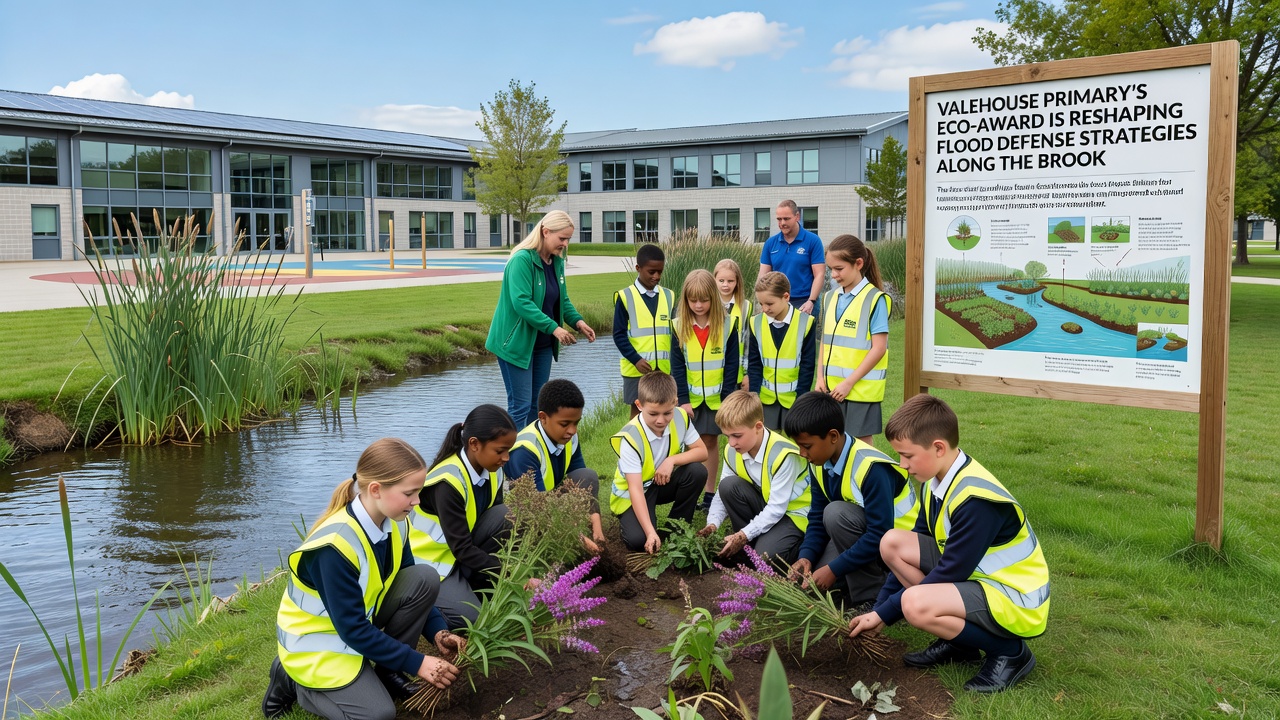
November 2026 marks the scheduled start of a joint monitoring phase where sensors installed by the school feed directly into regional flood alert systems. Figures from earlier pilot sites indicate that living barriers can reduce downstream flooding by up to fifteen percent when combined with retention ponds, and Valehouse data aligns with those findings. Experts at the European Environment Agency have published similar observations from projects across several member states, showing how educational sites contribute consistent records that support larger modeling efforts.
Community Involvement and Data Sharing
Parents and residents joined workdays to maintain the plantings, turning the brook edge into a shared resource rather than a separate infrastructure project. Workshops at the school taught basic surveying techniques so volunteers could update maps of vegetation growth and sediment movement. Those maps now supplement official surveys from the local water authority, creating a more detailed picture of how the brook responds to seasonal rainfall.
One study released by the University of Melbourne examined comparable school-based restoration sites in Australia and found that repeated student measurements improved the accuracy of flood models over time because the data captured micro-changes that annual inspections often miss. Valehouse adopted elements of that methodology, adding weekly checks during wet periods.
Long-Term Monitoring and Adjustments
Plans call for continued data collection through 2028, with annual reviews that compare brook flow rates before and after the eco-award projects began. Adjustments to barrier height and plant density will follow from those comparisons, keeping the system responsive to actual conditions rather than fixed designs. Local records already show fewer instances of overbank flow in treated sections during moderate storms, although major events still require additional upstream controls.
Conclusion
Valehouse Primary's eco-award has supplied both practical examples and ongoing records that local planners now incorporate into brook flood strategies. The combination of student monitoring, native planting, and shared data has produced a model that other communities along similar waterways can examine. Continued measurements through the coming years will determine how well these living defenses perform as rainfall patterns shift, yet the current evidence indicates that educational sites can contribute measurable support to regional water management efforts.