Nils Vogel · 27 September 2026
Chronicling Change: Five Decades of Village Bulletins Capturing Community Milestones
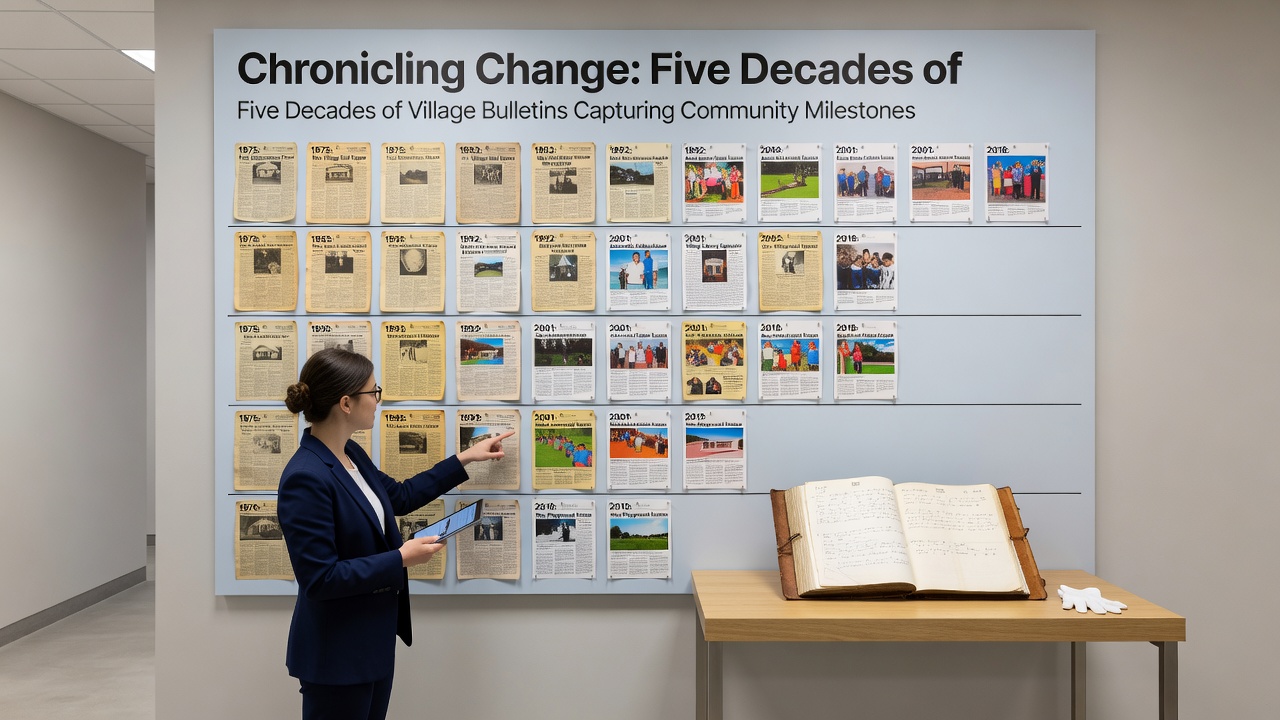
Local bulletins launched in the mid-1970s have tracked the transformation of rural settlements through consistent monthly issues that record births, infrastructure projects, agricultural shifts, and social gatherings while preserving details that official records often overlook. These publications emerged from volunteer committees that distributed typewritten sheets to households, and over time they expanded into printed formats with photographs that captured everything from harvest festivals to school expansions. Archival collections now hold complete runs that span fifty years, and researchers access them to trace patterns in population movement and economic activity.
Origins and Early Documentation
Initial editions from 1975 focused on immediate concerns such as road maintenance schedules and village hall bookings, yet they also noted seasonal weather impacts on crops that affected the entire area. Committees gathered contributions from residents who submitted handwritten notes about family events, and the resulting pages created a shared narrative that connected isolated farms with the central settlement. Data compiled from these early issues reveals steady growth in household numbers between 1975 and 1985, and similar records from comparable regions appear in collections maintained by the National Library of Australia where community newsletters serve parallel functions.
Milestones Across the Decades
Bulletins from the 1980s documented the arrival of new families alongside the closure of traditional shops, while issues in the 1990s recorded the introduction of broadband services that altered communication patterns for many households. Observers note that each decade introduced distinct themes, including environmental initiatives in the 2000s and renewable energy installations in the 2010s, and these entries provide quantitative details such as the number of solar panels installed on public buildings. One study from the University of Toronto examined similar bulletin series and found that they often contain more granular demographic information than census summaries alone.
Adaptations in Format and Distribution
Production methods evolved from manual typewriters to desktop publishing software by the late 1990s, and distribution shifted from door-to-door delivery to email attachments supplemented by printed copies for those without internet access. Editors incorporated color photographs starting around 2005, and this change allowed clearer documentation of events such as annual fairs and restoration projects. Circulation figures remained stable despite digital alternatives, and surveys conducted by local heritage groups indicate that printed versions still reach a significant portion of older residents who prefer tangible copies for annotation and archiving.
Contemporary Records and Future Outlook
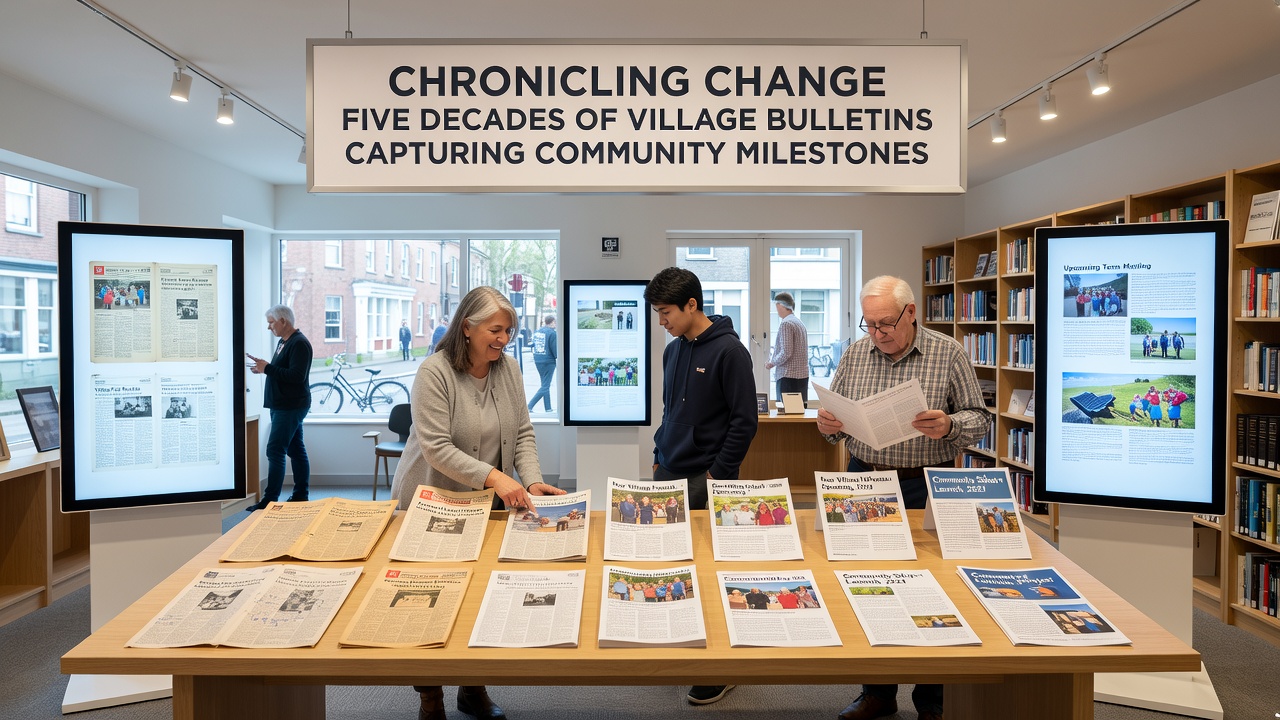
Issues published in 2025 and continuing into September 2026 continue the tradition by logging infrastructure upgrades and youth program expansions that reflect ongoing adaptation to new circumstances. Digital archives now supplement physical collections, and indexing projects allow keyword searches across decades of content that previously required manual review. Contributions from younger residents have increased in recent years, and these additions bring perspectives on topics such as remote work trends and sustainable transport options that earlier editors could not have anticipated.
Conclusion
Five decades of uninterrupted bulletins have assembled an unbroken record of community life that complements formal government statistics and academic studies, and the ongoing series scheduled through 2026 ensures that future researchers will inherit the same detailed accounts that current residents consult for context on local decisions. These publications demonstrate how consistent local documentation accumulates into a resource that supports both historical analysis and contemporary planning.